Note: Due to my inability to sit down and write in any sort of regimented way, this movie has now, like, basically faded into obscurity. So I’m requesting that you act like it just hit theaters and it’s still very much in the zeitgeist. Thanks! -Management
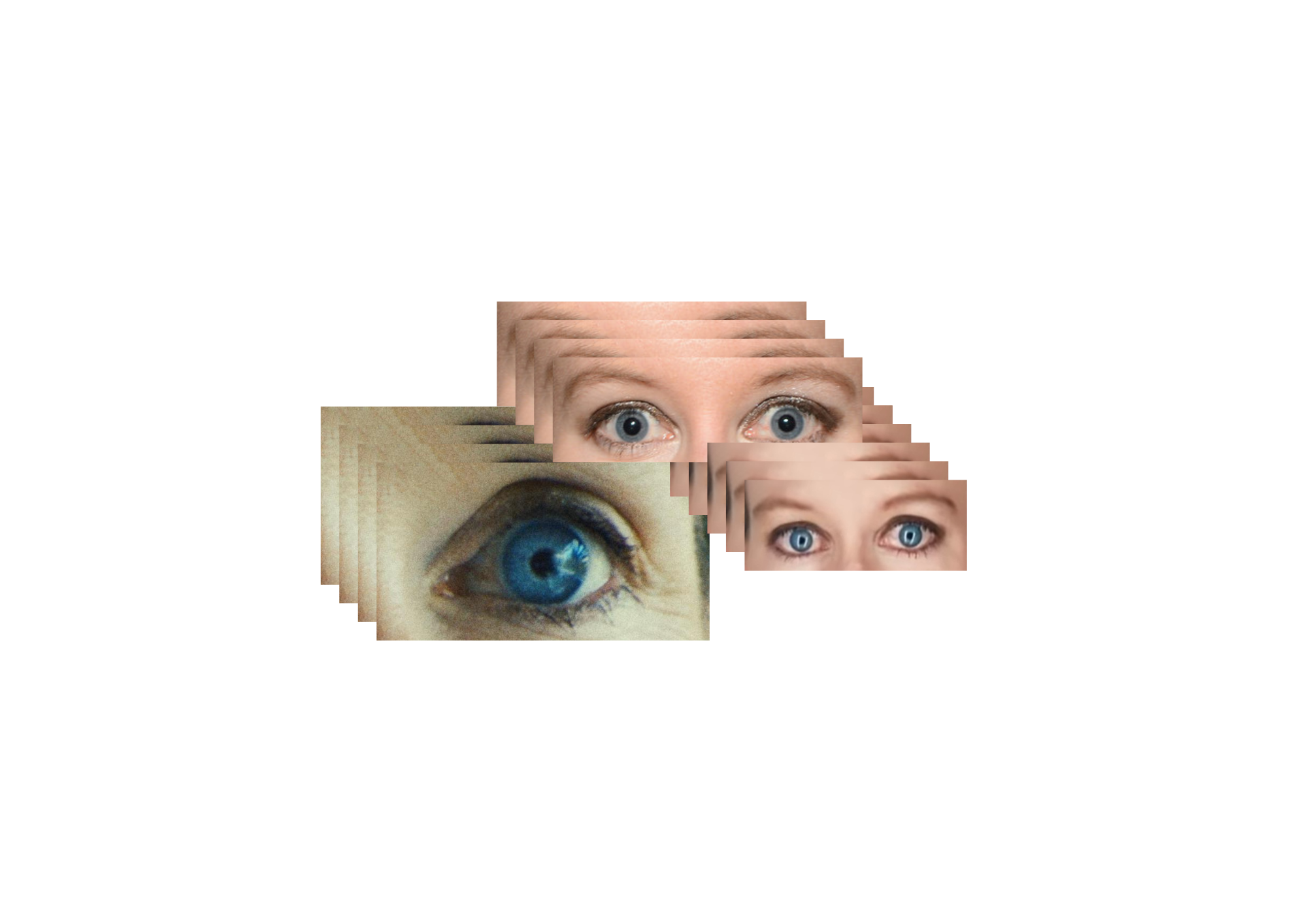
“Real eyes realize real lies” -Confucius
I acknowledge that we are positively drowning in capital D Discourse re: You Can See Everything. However, not to be an elitist dickhead, I have yet to see a “normie” opinion that accurately reflects my feelings. Regarding these pseudo-monoculture events1 my policy is if I come across a well-articulated opinion I agree with, I make the active decision not to add my own take.2 But, since everything I’m seeing is people alleging weaponized incompetence via egg-beating or speculating about sexual/romantic tension between filmmaker and subject, I’ve decided that, in the case of You Can See Everything vs. The Culture, The Culture desperately needs me.
On its surface, the movie hinges on these on-screen moments that illustrate Nathan Fielder’s superpower of being able to withstand literally any degree of discomfort as he effectively out-awkwards his opponent. I mean, the most iconic clip of the movie is Nathan and Elizabeth Holmes staring deeply into each other’s eyes — a visual representation of each one, for the first time in their lives, meeting their match. When an unstoppable force meets an immovable object type beat.
Obviously, the visuals are important! But to me, the most provocative moments were those that dealt specifically with words, more so than visuals. The meanings of words, how words are being weaponized, which words are or aren’t being said, etc.
There are several specific moments that illustrate this point really well, so I’ll probably format this high school essay style.
The “character I created” vs. “character they created” debacle
The Theranos machine can vs. is capable of discovery
"Who’s on First?” meltdown
Misguided “We don’t even have to talk to each other…” romance
Did Elizabeth say “I knew he was talking about it” or “I knew he was talking about something” ?
On the performativism of calling everything “performative”
We’ve reached maximum saturation of the word performative – as in labeling things and people. It now takes a herculean effort to push against the reflex to unceremoniously slap something/someone with “performative” allegations. And I guess my issue is less with the labeling itself and more with the way people use it to write off said “performative” thing as not worthy of any further investigation or reflection. Like…..what if I told y’all that something can be simultaneously performative AND worth more than a cursory glance.
I think the best rhetorical exercise for ME is to either a) take everything at face value and metabolize it as if Elizabeth isn't being performative or b) at least dare to ask to what end is she behaving performatively. You guys don’t have to go on that rhetorical journey with me, but I’m just warning you that that’s where my analysis will be coming from, so it may benefit you to do some mental recalibrating before you continue reading.
Wait. If I created this character, and they created this character, who the fuck is flying this plane?
Early in the movie, we see Elizabeth and Billy with twists firmly in their panties due to a debate over the wording of a sentence in a New York Times profile about her.3 Also, not the point, but it’s where she publicly debuted switching from “Elizabeth” to “Liz” which is actually also kind of about semantics (everything is), but I digress. She thought it gave “Prince” to “The Artist Formerly Known As Prince”.4 What symbol could possibly capture the gravity of "The Felon Formerly Known As Liz And Before That, Known As Elizabeth Holmes"? NOBODY tell her about wingdings.
The line reads,
“At one point, I tell her that I heard Jennifer Lawrence had pulled out of portraying her in a movie. She replied, almost reflectively, ‘They’re not playing me. They’re playing a character I created.’”
Liz and Billy are sooooo up in arms about this and being like “she NEVERRRR would’ve said that!!!!!!” Like, not only are they convinced that she was misquoted — she NEVER said that; they’re also convinced that it’s in direct opposition to her character — she never WOULD’VE said that. Whole time I’m sitting there like uhhhh…it literally sounds exactly like something she’d say. She’s pathologically obsessed with distancing herself from all of her actions, so of course she would’ve found an external entity, a character if you will, upon which to project her less savory qualities. Predictably, she’s even offloaded ownership of the fried, dyed and laid to the side bundle of straw (see: hair) that established her likeness.5
Anyway, so Liz and Billy are alleging that what Liz must’ve actually said is “They’re playing a character they created.” And, not to be annoying, but this does indeed have very different implications from what she was quoted as saying.
Since I’m already #Here and #DoingThis, I’m just gonna completely give myself over to it. Words structure narrative, yes? Like, they are literally building blocks that link and stack and compound to form the narrative. AND, ALSO, the meanings of those words are what inform the narrative. Do you know what I’m saying? I actually think this is important! Or at least it was important in my understanding of what this movie means.
For someone like Elizabeth, who has latched onto this wrongfully-accused, perpetually-misunderstood victim narrative,6 the hope of preserving literally any prosperity in her life depends entirely on her ability to perpetuate said narrative. Evidenced by the way she takes accountability of literally as little as humanly possible. She acts like she doesn’t want a single thing to ever be attributed to her, lest that attribution come back to bite her.
To that end, she exclusively utilizes (see: weaponizes) methodically sterilized impersonal language and sweeping generalizations. This underscores the point that all the normies were making about how she purposely seeks out domineering, narcissistic men. These men are, conversely, obsessed with everything being attributed to them and are therefore literally always talking about themselves and forcing as much of themselves into as many narratives as possible. It’s extremely easy for a charlatan of Elizabeth’s caliber to hide behind these types of personalities. Whether or not she hides behind them purposely is not my business, nor is it important to the point I’m making…I’m just throwing the normies a bone.
The point is, if Elizabeth did say “a character I created” then she’s taking credit for, or allowing this to be attributed to her. But if she said “a character they created” then she’s distancing herself from it; she’s dodging accountability for the character in question, for the calculation necessary to even invent a character in the first place, and for anything this character does.
Am I capable of kicking it? Yes, you can
It is at this point that my brain started breaking.
Nathan and Liz start talking about Theranos — which, up to this point, has been the elephant in the rented San Diego beachside bungalow . He’s trying to figure out whether Liz genuinely believes her years-long insistence that she’s innocent. Like, is she just saying she’s innocent because she’s following the status quo long-established by her white collar criminal forefathers? Or has she corrupted her worldview so thoroughly that she sincerely doesn’t see the illegality of her actions? I’ve always been confused about whether she flat-out denies any wrongdoing, or is simply constitutionally incapable of acknowledging the connection between committing certain actions and those actions being illegal.
Nathan finds a clip of Elizabeth, years prior, stating that the Theranos device “can” run hundreds of tests with just a single drop of blood. And Nathan is like hey so literally the device could NOT run hundreds of tests with just a single drop of blood and Elizabeth is like fuck you bozo, yes it can. They sort of go around in circles until Nathan asks Elizabeth to go into more detail about the process the device goes through to run these tests. And it is during this explanation when Nathan finally locates a window into Elizabeth and how her brain works, and more specifically, how she uses/abuses language.
Elizabeth said the device CAN run hundreds of tests with just a single drop of blood. But what she meant is that the device is CAPABLE of running hundreds of tests with just a single drop of blood. And when Nathan points out the difference between these two statements — the semantics, one might say — she’s still unable to understand or identify why those statements do not share the same meaning.
This is the watershed moment for me.
I have spent the past handful of years with my feet surgically fused to my soapbox, upon which I’ve been fucking screaming that words have meanings. And those meanings actually have implications beyond any one person’s individual understanding or definition of a word. It’s more than just abusing bastardized language or colloquialisms or slang — y’all deadass just be using words incorrectly. 7
WORDS HAVE MEANINGS!!!!! There exists no greater shrine to the importance of semantics than a woman literally going to prison because she doesn’t know there’s a difference between saying her invention can do x thing and saying it is capable of doing x thing.
Ego death at a “Who’s on First?” viewing party
There’s a tradition that has long since existed in straight and gay culture, which has recently broken containment and spread to whatever secret third thing constitutes the culture of a non-married couple and the random autist who’s filming them (actually, this must be called “Warholian culture”).8 The tradition I’m referring to is that of sitting someone down and showing them a YouTube video.
For straights, it’s watching clips of mediocre standup, weird Jackass knockoffs, and extreme sports highlights. For gays, it’s the sacred Music Video Night. For these three lunatics, it’s Nathan Fielder being like lemme just casually conduct one of the most profound psychological experiments of these modern times via a clip of Abbott and Costello doing “Who’s on First?”
The profundity of this scene starts with my being impressed that Nathan even thought to show this to her. By that I mean, I think it’s so impressive that he had the “can” vs. “is capable of” conversation with Liz and then was like, well I think this is probably indicative of an inherent quality that nobody has been able to succinctly identify or describe. So, as a vehicle for identifying or describing it, he just casually thought to pull “Who’s on First?” out of his ass? It is a perfect, tailor-made modality with which to illustrate this discovery; not only to the audience, but to Liz herself.
The whole joke in “Who’s on First?” is predicated on a semantic misunderstanding. So already I’m like uh huh, this my shit.
This scene is the most distilled depiction of Elizabeth Holmes’s thought process I’ve ever seen and it’s crucial that the viewer is able to recognize this processing pattern in her. Because if you recognize that she doesn’t understand the most fundamental aspect of “Who’s on First?” — that is, the difference between a player whose last name is “Who” and someone using the word “who” to ask for the identity of that player — then you finally understand how she could’ve possibly made such a colossal fuck-up, simply by conflating the definitions of “can” and “capable”.
The other thing is how it shows her cunning in its rawest form.
When Nathan first asks Liz whether she thought the clip was funny, she’s like “yeah!” because you know that she knows that she’s supposed to have found it funny. It’s a comedy routine. She can literally hear the live audience laughing in the clip — of course she thinks it’s funny! And then when Nathan pushes her on what exactly she found funny about it, you can see her actively trying to figure out the “correct” answer.
In general, but especially in this scene, she seems utterly uninterested in the concept of subjectivity. She doesn’t know or care what she found funny about “Who’s on First?”; she cares about making sure Nathan knows that she viewed the clip “correctly”…whatever that means.
And THEN when Nathan explains the joke to her and draws a parallel between her not understanding the joke and the “can” vs. “capable” conversation, she like literally shuts down.
I don’t think Elizabeth Holmes is interested in understanding herself. In fact, she might even consider being a stranger to herself a strength. Recalling what I was talking about earlier — she doesn’t take accountability for or identify with anything, if she can help it. Why would she want to identify (with) her identity? She wouldn’t! But life came at her so fast that she’s found herself sitting in front of Nathan Fielder’s weird (non-derogatory) ass as he’s telling her things about herself and she’s all like, erm 🤪 🥸 😦 404 error vibes! ✌️
I want to make it clear that the mental process I’m describing should not be equated to being “performative”. Not only do I not believe she’s being performative, more importantly, I think saying so is fucking uninteresting. Now you’re wrong AND boring. What did we learn?
When the Love Language is no language
One of the most bone-chilling nuggets in this movie (of which there are thousands) comes in the form of Billy and Liz bragging — with completely unearned superiority — that their relationship has…transcended speech. According to them, they know each other so well, on a level so deep as to render something so rudimentary as expressing oneself aloud, obsolete.
A disturbing notion in itself, it’s somehow made infinitely worse when you realize that they truly believe they’ve somehow optimized…being in love???
The illness that is Silicon Valleyites’ pathological need to optimize fucking everything. I can’t.
Eventually it’s revealed that Billy has unilaterally decided to appoint himself Elizabeth’s social media manager. Now, I guess it would be one thing if he used this platform to do something normal; but since he’s a fucking weirdo, he chooses to use it to manufacture and propagate conservative slopaganda.
When asked what Liz thinks of this “rebrand”, Billy reveals that he a) didn’t ask her permission to start posting on her behalf in the first place and b) has chosen not to make her aware of it at all. According to Billy, a conversation would be unnecessary since he already knows what Liz would say.
It’s not that I don’t understand what Billy and Liz think they’re doing; it’s that they lack the necessary social context to embody this romantic ideal in a normal fucking way. They heard the phrase “to be loved is to be known” and ran with the most bizarre interpretation they possibly could.
The goal of understanding the person you’re in a relationship with is NOT to master it so thoroughly that you then don’t talk to your partner. Typically, people actually enjoy the act of talking to the people they love. Billy and Liz are treating their relationship like they have to answer to shareholders about its efficiency.
My question to them is this: have the two of you ever made a genuine effort to just…be normal? Must you behave like fucking freaks in every facet of your lives? To what end?
My question for the culture9 is this: why do straight couples fucking hate each other? Have y'all tried...idk...being gay instead?
Little Ms. Quoted
The movie ends with Nathan realizing(?) that, in his transcription of a conversation he had with Liz, he’d misquoted one of her responses. Nathan asked whether she was aware that, prior to filming for the movie started, Billy scheduled a meeting wherein he insisted Liz be paid for participating in the film.
What Nathan originally quotes Liz as saying is, “I knew he [Billy] was talking about it…” Then, after hearing it read back to him, Nathan remembers that she’d actually said, “I knew he was talking about something…”
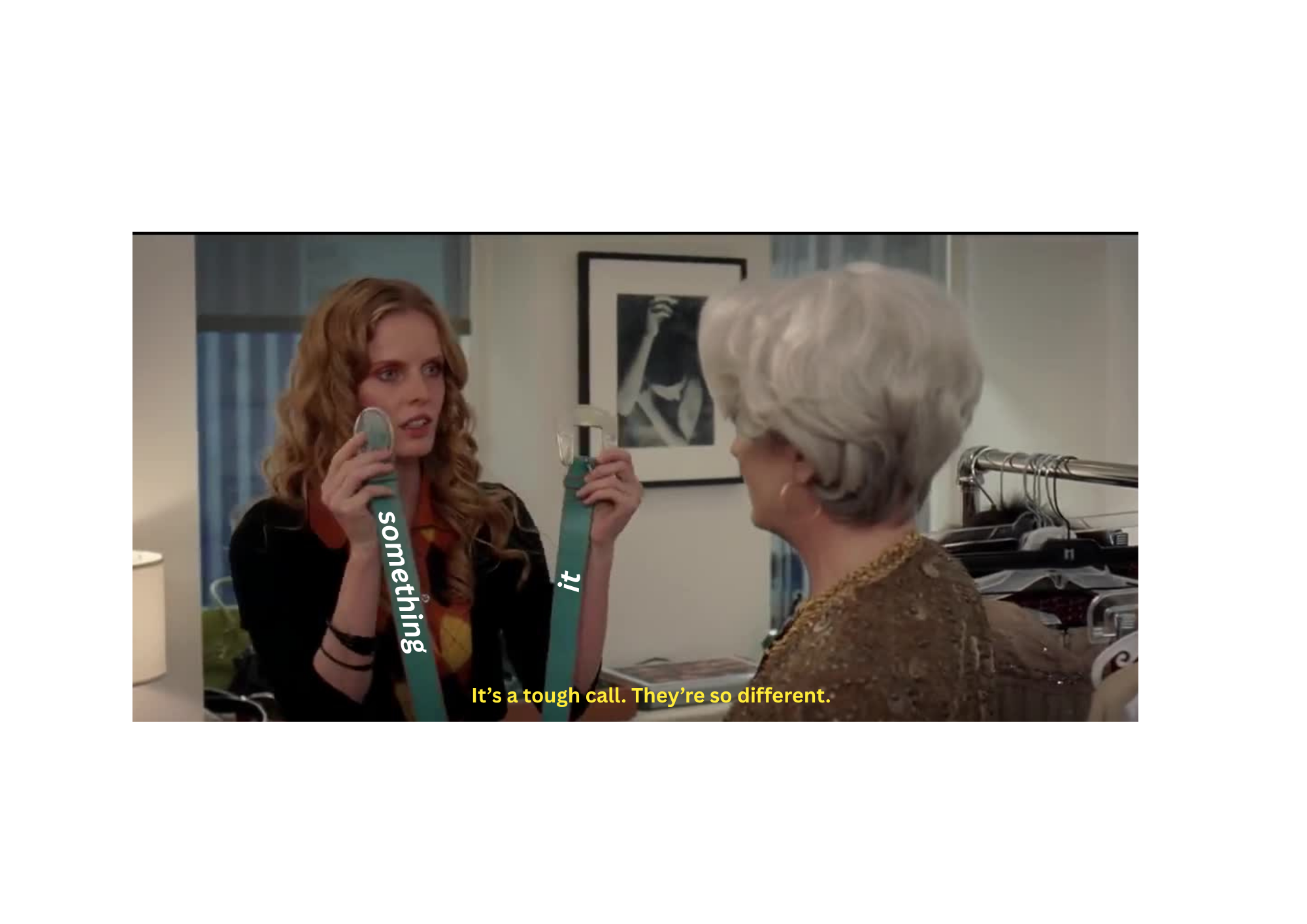
Social media denizens are all too sure that this points to a romance between Nathan and Liz, but since I’m not stupid, that’s not my take.
If anything, it’s just quadrupling down on the incredibly large role language plays in the Elizabeth Holmes Story. Frankly, I’m having a hard time deciding whether I give a shit about which word she used. It’s more about the fact there even could be (and are, actually) real-world implications hinging, deadass, on her saying “it” rather than “something”. That’s genuinely how powerful language is!!! I could run through a fucking brick wall right now!!!
And while I know I care about grammar and language and syntax and semantics more than Tom, Dick, or Harry, I need all of you to start caring that your world, our world, is implicated in the language you use.
Obviously, the stakes for Elizabeth Holmes are a little different than any of ours, but stakes don’t dictate importance here.
You Can Snort Everything
I also need to briefly highlight how effectively this documented cocaine addiction and abuse.
After dropping Liz off at prison camp, Billy’s life seemingly becomes solely comprised of standing in weird places, having the coke sniffles — two activities universally favored among cokeheads.
An aside: there’s a shocking lack of online discussion re: this fucking freak watching biology/chemistry videos in like 4x speed. It was so deeply disturbing and I don’t know why nobody has 5150’d him yet.
I loved seeing his mounting paranoia as the film progresses. At a certain point, bro is literally just inventing opps for fun. He’s convinced that people are carrying out these elaborate plots against him and it’s like dawg…you are simply not important enough to warrant the creation and subsequent activation of an elaborate plot.
He thinks that just because he moved to Austin, started carrying a gun, bought an absurd and truly unnecessary number of exotic pets, exhibits a minimal amount of interest in the livelihood of his children, and got jaw implants that anyone gives a fuck about what he’s doing. Who’s gonna tell him that that literally describes every single man in Austin.
He maxed-out the abilities of his cokehead form, so he sort of (d?)evolves into this cokey-tweaker amalgam, preserving only the worst attributes of each. Monstro Elisasue style.10
I sincerely feel like there aren’t enough realistic depictions of cocaine abuse in popular media right now and it’s important that we have unflinching portrayals like this one that do the work of 1,000 PSAs.
TL;DR
In conclusion, I just want y’all to care about language. It matters what you say and how you say it. And what better way to prove this point than via THEE Elizabeth Holmes cautionary tale that is: this shit can literally land you in prison.
Choosing to remain semantically ignorant = taking penitentiary chances. Stay dumb at your own risk!
1. Pseudo because modern society doesn't allow for *true* monoculture anymore ↩
2. This philosophy is why I stopped writing about pop culture on here, since I know you've all been thirsting for an explanation! ↩
3. Copy this link into archive.is to get around the paywall ur welcomeeeeeee ↩
4. For the uncultured ↩
5. The concept of a major publication writing an honest-to-god moritorium on Elizabeth Holmes' heinous hair. ↩
6. An inherently frail narrative, mind you, if it could be toppled by saying "I" instead of "they" ↩
7. For example, one that’s been kicking y’all’s asses for literally years is the conflation of nepotism with privilege. They are related, but are NOT! interchangable. PLEASE utilize the technological ingenuity that is The Dictionary. ↩
8. Fuck: straight culture; Marry: gay culture; Kill: Warholian culture ↩
9. For the uninformed ↩